Were you informed about the possibility of SIBO die-off symptoms like increased bloating and gas occurring once treatment started?
If the answer was no, your experience is like most of our clients who were treated for SIBO before they started working with us.
They didn’t realize that their bloating and gas could actually get worse. Or they could have new symptoms like brain fog, fatigue or diarrhea.
Perhaps they were under the impression that SIBO is like an infection, in that once you start treatment, symptoms start to improve right away.
Unfortunately, nothing could be further from the truth.
SIBO is not an infection. It’s a type of dysbiosis that occurs due to slow motility of the small intestine. And the key to resolving SIBO is to understand the root cause.
Antibiotics and herbal antimicrobials are used as a part of a SIBO treatment protocol to help reduce the amount of microbes that have overgrown. But treatment is just one step of many in healing from SIBO.
And we understand that there is nothing more frustrating than working hard to improve your SIBO symptoms by changing your diet and then feeling worse once you start your SIBO treatment. It can feel so defeating… like a huge setback!
But fear not, fellow SIBO warrior!
If you are experiencing SIBO die-off symptoms, the good news is that the added misery shouldn’t last too long and we have ways to keep die-off symptoms to a minimum.
With that being said, it’s important to understand the difference between typical SIBO symptoms, SIBO die-off symptoms and having a reaction or intolerance to SIBO treatment.
Here’s what you need to know.
What is SIBO?
SIBO stands for Small Intestinal Bacterial Overgrowth. In general, we want to have a diverse and happy colony of bacteria, fungi, yeast and microorganisms in our body, just like a happy zoo has many different animals to visit. But, the critters need to be in the right place.
We feel our best when these microorganisms are mostly in the colon, supporting the work of digesting our food, feeding the cells lining our intestines and making nutrients, such as vitamin K. This gaggle of microorganisms is also known as the microbiome.
If things are out of balance; we can start to develop digestive issues. SIBO is a type of dysbiosis, or imbalance of good gut bacteria caused by slow motility of the small intestine. Think of it as too many of the good guys in the wrong place. This overgrowth can cause more harm and a wide range of symptoms – UGH.
Remember, the key to resolving SIBO is to understand and address the root cause. And your root cause could be different from someone else’s root cause.
You can read more about the various root causes of SIBO in our comprehensive overview of SIBO here.
What Are Typical SIBO Symptoms?
We have worked with hundreds of clients with SIBO including hydrogen dominant, methane dominant (now called IMO, which stands for Intestinal Methanogen Overgrowth) and hydrogen sulfide SIBO.
No two cases are the same but the most common symptoms with all three types of SIBO are bloating and gas.
With hydrogen dominant SIBO, you can typically experience diarrhea (or normal bowel movements).
With methane dominant SIBO or IMO, you can typically experience constipation (or normal bowel movements).
And with hydrogen sulfide SIBO, that is typically associated with diarrhea (or normal bowel movements).
Many clients also have other symptoms like acid reflux, anemia, anxiety, brain fog, fatigue, nutrient deficiencies and more.
We find that when we work to improve SIBO symptoms and digestive function BEFORE treatment with antibiotics or herbal antimicrobials, then SIBO treatment can be more effective and there is less likelihood of experiencing die-off symptoms.
Psst: you can read more about different types of SIBO diets right here. But keep in mind that the best SIBO diet is personalized and includes foods you tolerate and limits foods you can’t tolerate.
Still Bloated? What’s Missing in Your SIBO Protocol?
Eliminate the sneaky triggers keeping your symptoms flaring.
SIBO treatment options
IIf you’ve gotten a diagnosis of SIBO and you have improved your symptoms with diet, supplements and lifestyle changes, then you may be ready for treatment.
We recommend that our clients change their diet to help improve symptoms. In many cases, that means, reducing (not eliminating) certain carbohydrates that can be fermented by SIBO microorganisms. Every client reacts differently to food, so a personalized approach is one that limits foods that make symptoms worse while allowing foods that are well-tolerated.
SIBO treatment can include antibiotics and herbal antimicrobials. Studies have shown that specific antibiotics can be effective in treating the specific type of SIBO.
Rifaximin (Xifaxan is the brand name) is used to treat hydrogen-dominant SIBO.
Rifaximin plus a second antibiotic, either Neomycin or Metronidazole (brand name is Flagyl), is used to treat methane-dominant SIBO or IMO.
Rifaximin plus bismuth is typically used to treat hydrogen sulfide SIBO.
It’s important to verify with your doctor that you are being prescribed the right treatment for the type of SIBO you have.
I can’t tell you how many times a client thought they were treated for SIBO and that treatment didn’t work. Turns out that they were given the wrong treatment.
Herbal antimicrobials can also be used for all types of SIBO but keep in mind that just because they are natural does not mean they are harmless.
Herbs are plants and there is opportunity for an allergic reaction or sensitivity.
Further, some herbs can have damaging consequences to the gut microbiome just like antibiotics do.
Antibiotics and herbal treatments are used to target the overgrowth living in your small intestine. They do their work to kill the organisms, but as they’re dying, you might experience SIBO die-off symptoms. Or you may experience a reaction to the treatment. It’s important to distinguish the difference.
What is SIBO Die-Off?
As the rogue organisms are killed, they don’t go quietly into the night. They’re releasing toxins and your immune system mounts a response to fight back. This is also known as a Herxheimer reaction (or Herx for short).
Not surprisingly, having any toxins released into your body doesn’t feel great; these toxins are the cause of your SIBO die-off symptoms.
Our clients can’t wait to treat their SIBO and expect to feel so much better once they start treatment. Unfortunately, it’s not always a smooth ride. Buckle up and prepare for turbulence!
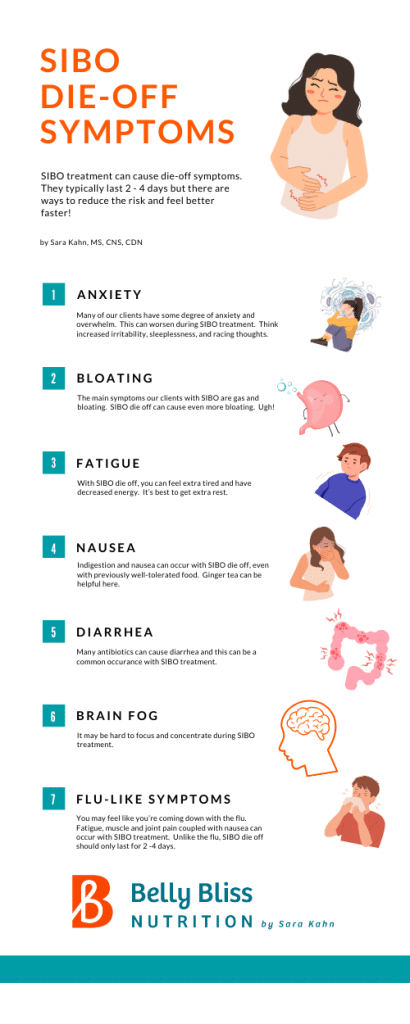
What are the symptoms of SIBO die-off?
Having the toxins released in your body is the cause of your SIBO die-off symptoms. You’re just not going to feel great while the microorganisms are fighting to stay alive in your gut.
SIBO die-off is short-lived, and symptoms vary by person, but you may experience:
- Anxiety
- Bloating (very common)
- Fatigue
- Nausea
- Diarrhea
- Difficulty focusing
- Flu-like symptoms
- Muscle and joint pain
How long does SIBO die-off last?
This can vary by person, but we find that the more you’re able to improve digestive function prior to having a SIBO treatment, you can reduce the likelihood or severity of die-off symptoms. The next section explains more about preventing SIBO die-off symptoms before they begin.
In our experience, our clients may experience SIBO die-off for 2 – 4 days. Think of it as the storm before the calm.
How can you prevent SIBO die-off symptoms?
After reading the list of possible SIBO die-off symptoms, you’re probably hoping to experience none of them. We agree: prevention is best!
This is how working with a SIBO nutritionist can set you up for success to minimize the complications as you treat SIBO (as well as help to prevent SIBO recurrence, which is common).
Pooping is a must
One of the main purposes of having bowel movements is to eliminate toxins. If you’re constipated or have slowed transit time, there is an opportunity for toxins to linger, ACK!
When we’re working with clients to mitigate SIBO, we like to focus on reducing constipation first, before discussing any antimicrobial treatment. By having regular bowel movements, we reduce the amount of time that the toxins are able to linger and cause symptoms.
Hydration is key
Being well hydrated helps to provide your body with the fluids it needs to flush out the toxins, supporting your body’s natural ability to detoxify the toxins that cause the SIBO die-off symptoms.
Being well hydrated also helps to prevent constipation. You’ll also feel less anxious and able to better focus if you’re well hydrated.
Herbal teas may offer additional benefits, beyond hydration, such as reducing bloating or belly pain. We love chamomile tea before bed!
Extra sleep
Did you know that poor sleep can cause digestive problems? You can click on the link for the full scoop.
Sleep is our body’s time to rest and repair. Our digestive system always benefits from being well-rested, but it is even more important while treating a SIBO overgrowth.
Getting enough sleep also supports the best functioning of your immune system.
Support Immune Health
When the SIBO gut bugs release toxins, your immune system springs into action. It’s important that we support your immune system with the tools it needs to do a great job in keeping the die-off reaction to a minimum.
Think about nourishing your body with nutrient-dense foods rich in vitamin C, vitamin A and anti-inflammatory omega-3 fatty acids.
We may recommend supplementing with vitamin D to address low or sub-optimal vitamin D levels shown on blood test results.
And managing stress levels is critical to both immune and nervous system health.
Go Low & Slow
This is not possible with antibiotic SIBO treatment, but with herbal antimicrobials, we recommend taking things slowly.
Another way to prevent or decrease die-off symptoms is by using one herb at a low dose, then adding other herbs as appropriate. Then the client can increase the dose when it’s comfortable to do so.
This approach also helps us understand if the herbs are well-tolerated or if we should select a different herb.
As tempting as it is to want to kill the SIBO gut bugs, so you can get rid of this ASAP, a more gentle and judicious approach can actually help you get relief faster.
Is it SIBO die-off symptoms or a reaction to SIBO treatment?
If you are feeling worse when taking antibiotics or herbal antimicrobials, you may be wondering if you are experiencing SIBO die-off symptoms or a reaction to SIBO treatment?
Here’s how to tell the difference:
SIBO die-off symptoms are short-lived and temporary. They usually involve an increase in gas, bloating, fatigue and perhaps a change in bowel movements.
A reaction to antibiotics or herbal antimicrobials may involve intense stomach pain, nausea, vomiting, fatigue, joint pain (and more) that doesn’t improve or resolve within a few days.
A rash, hives, swelling, and difficulty breathing could indicate an allergic reaction.
In either case, it’s best to contact your doctor to confirm.
My Story: SIBO Die-Off & Negative Reactions to SIBO Treatment
When I was treated for SIBO with Xifaxan, I experienced nausea and vomiting for one day. And when I followed Xifaxan with an herbal blend that was recommended by my functional medicine doctor, I experience two days of loose stools. I also experienced acid reflux, a new symptom that took several months to resolve. I essentially traded SIBO for reflux!
As a result of my own experiences with taking antibiotics and herbal antimicrobials for SIBO, our whole team is vigilant about monitoring for die-off and reactions. There is no need to suffer needlessly to resolve SIBO when there are many other better tolerated treatment approaches.
Key takeaways
All that being said, if your symptoms are severe, reach out to your physician. You may be having a reaction to the antimicrobial treatment.
SIBO die-off can be uncomfortable, but with the right preparation and partnership with your nutritionist, the SIBO die-off symptoms can be minimized.
And remember, treating SIBO is just one step in addressing this multi-faceted digestive condition.
Ready to take a step-by-step approach to getting relief from SIBO symptoms, resolve SIBO and prevent it from recurring? Reach out to book a free call to learn more about how we would approach your case.
Ready to Resolve SIBO for Good?
Note: This blog post was originally published February 2021. It was updated and reposted in September 2024.

Sara Kahn, MS, CNS, CDN is a board-certified clinical and functional nutritionist specializing in SIBO, IBS, and acid reflux. Based in New York City, she works with clients virtually nationwide to identify and address the root causes of digestive symptoms. After her own decade-long struggle with IBS and SIBO, Sara now helps hundreds of clients achieve lasting relief and food freedom through personalized, integrative nutrition strategies.